Chipikata Children’s Academy — Zambia
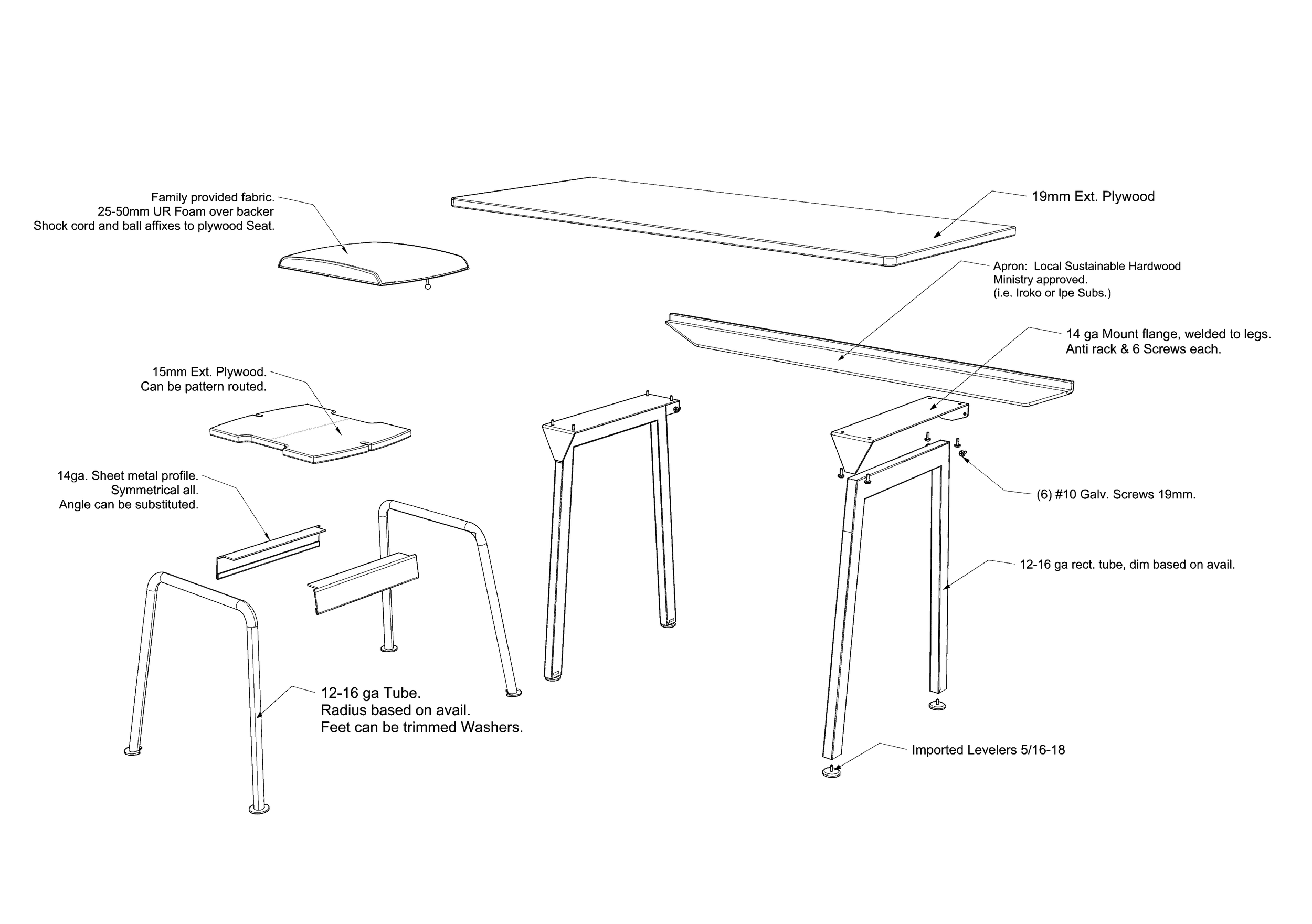
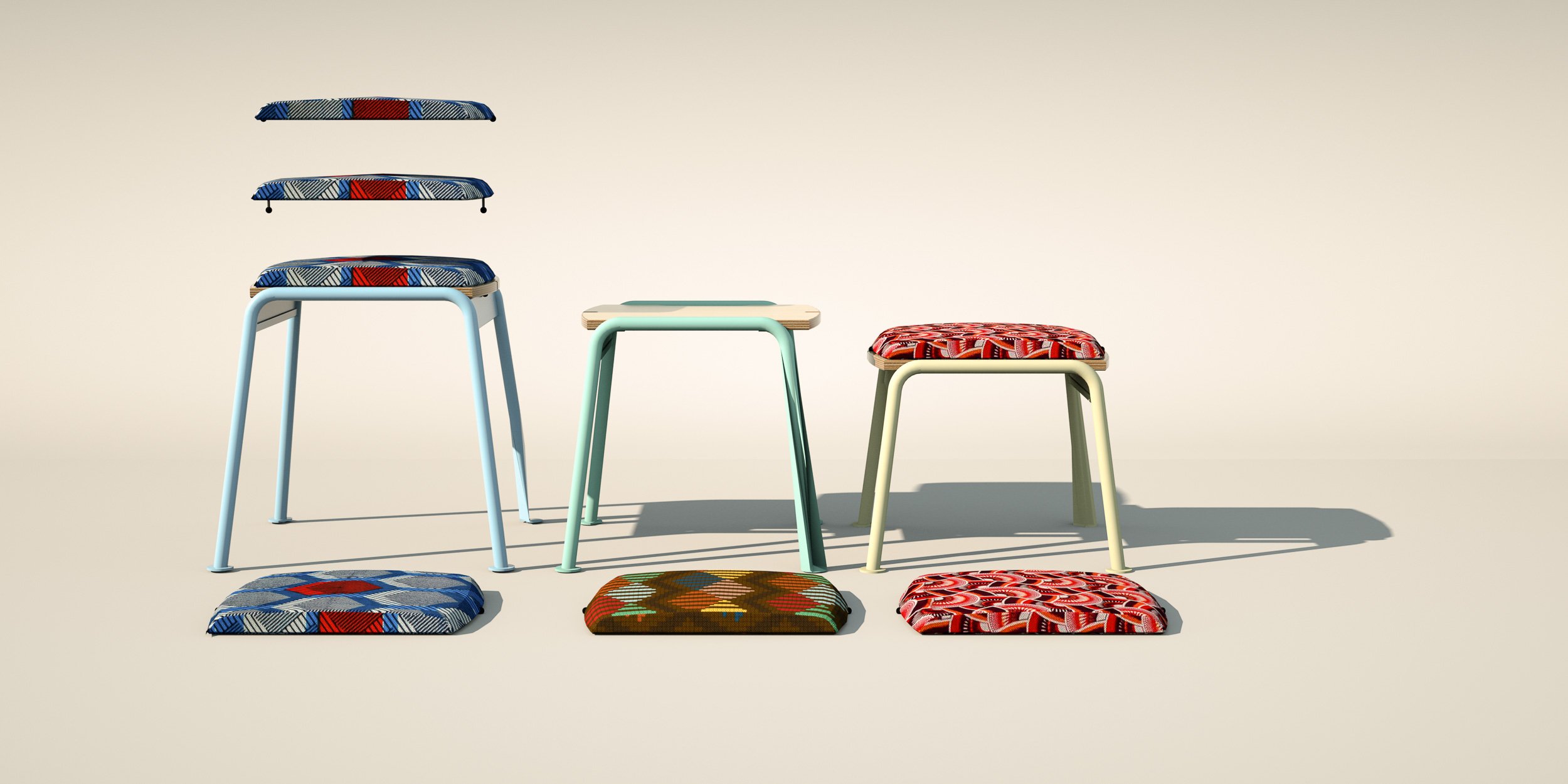
A locally manufacturable classroom furniture system designed for flexibility, durability, and student ownership. Tables and stools use simple materials and fabrication methods suited to local production, while removable seat cushions can be covered with fabrics chosen or supplied by students and their families.

Brief + Context
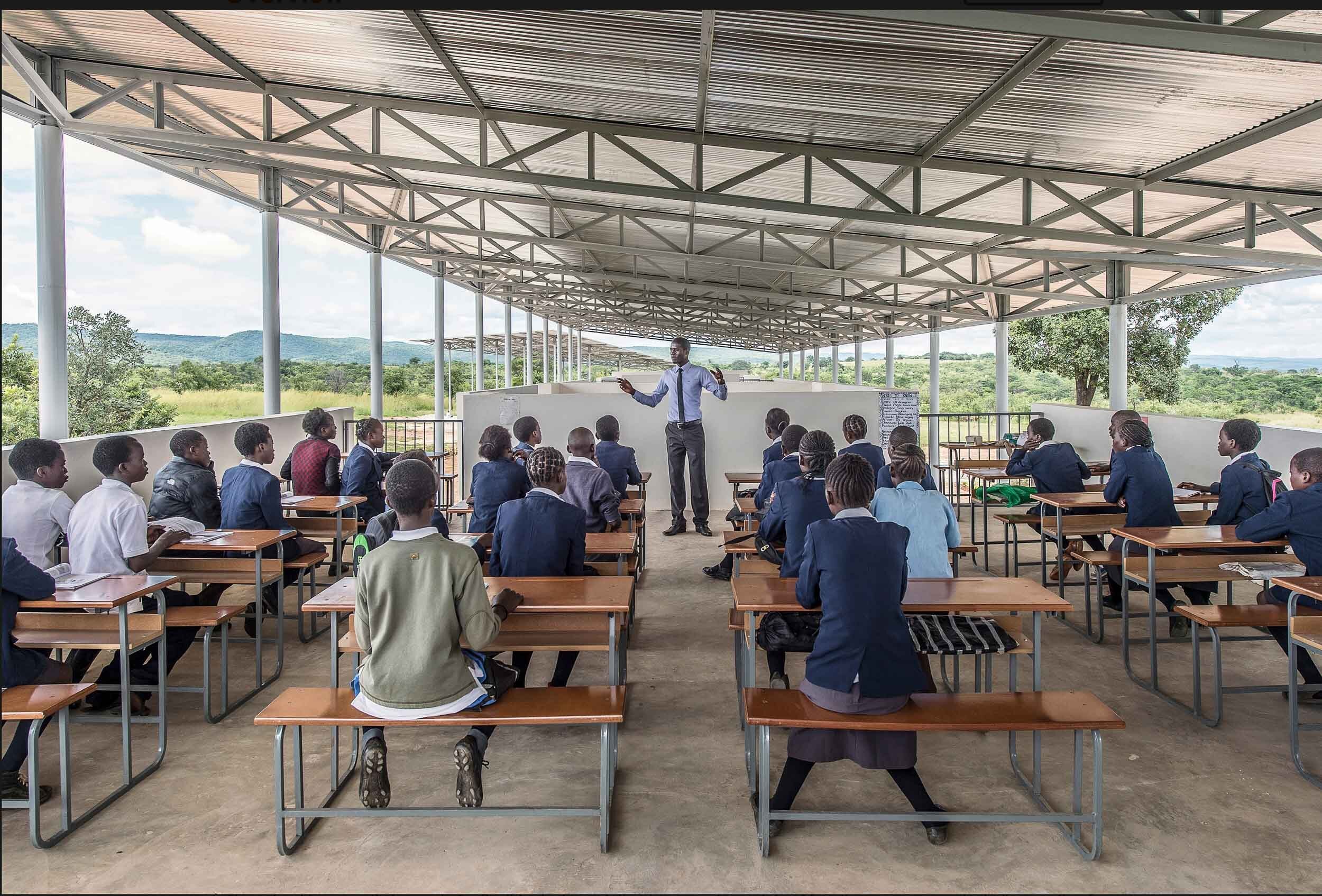
The furniture was developed for a new school in Zambia with an emphasis on affordability, local fabrication, repairability, and flexible classroom use. The goal was to avoid dependence on imported institutional furniture while creating a system better suited to collaborative and changing modes of learning.
Current Classroom Furniture
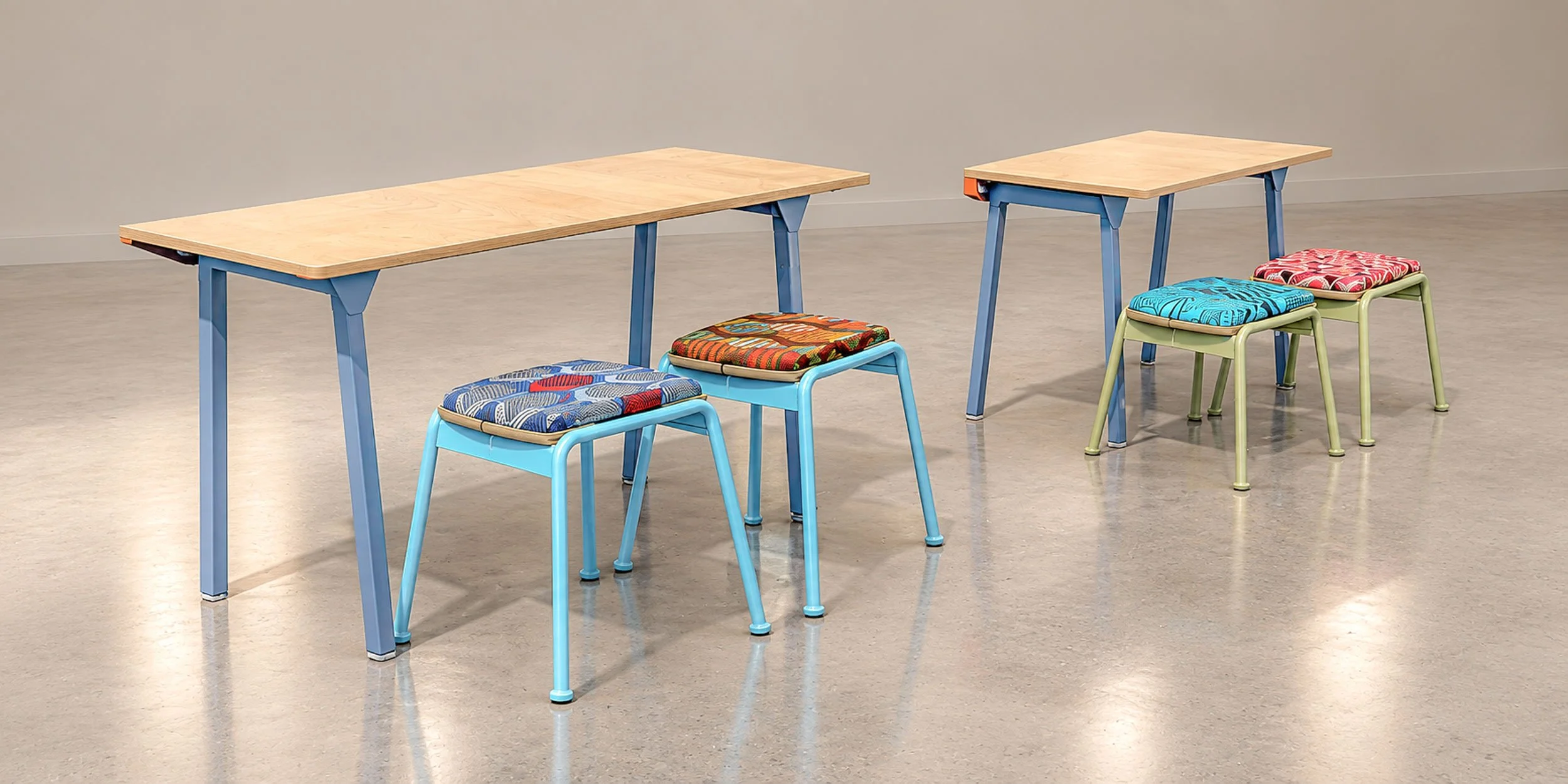
Furniture System
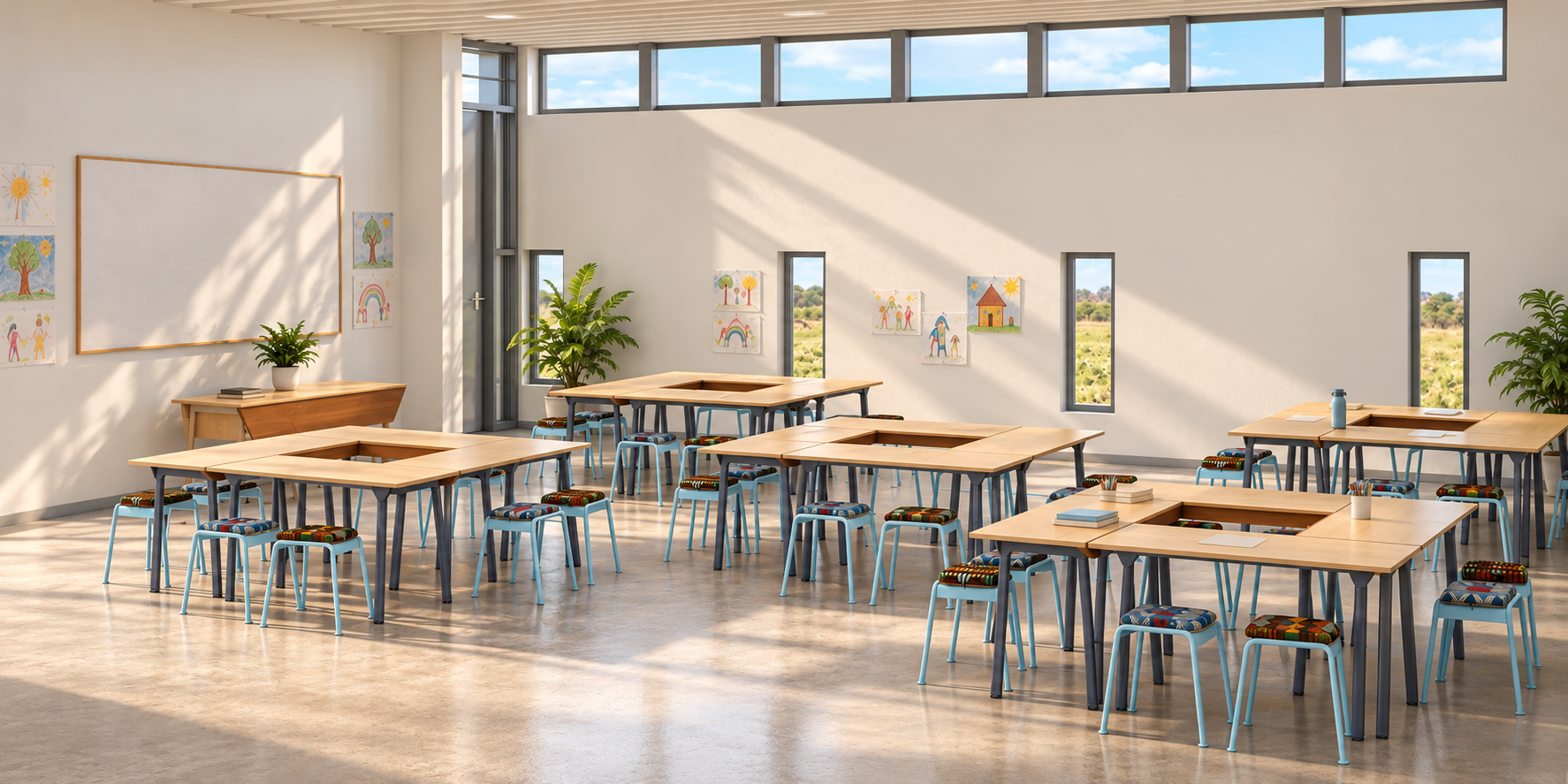
Lightweight tables and stools can be moved and reorganized by students for individual work, group learning, presentations, dining, or outdoor use. Multiple heights and table sizes allow the same design language to serve younger and older students.
Personalization
Removable cushions allow each seat to be personalized with locally available fabric or fabric supplied by a student’s family. The cushion becomes both a replaceable component and a personal object that can follow the child through their years at the school.
Local Fabrication + Construction
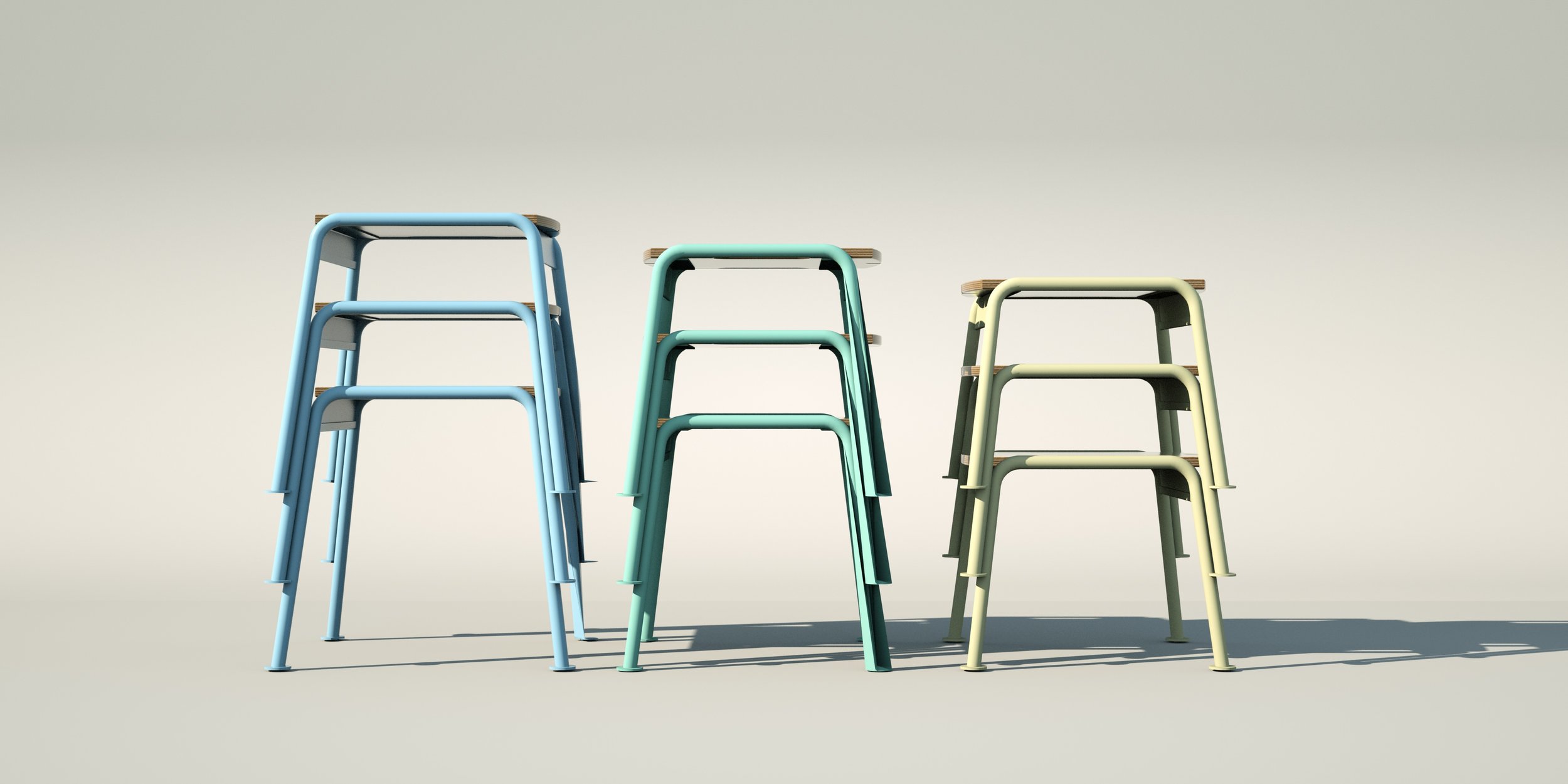
The system uses bent and welded steel tube, plywood, and simple upholstered components selected for local fabrication and repair. Stackable seating, replaceable parts, and straightforward construction reduce manufacturing complexity while extending the useful life of the furniture.